What Happens Behind the Counter at In-N-Out
Most fast food chains keep their kitchens hidden behind solid walls and pass through windows, which is partly why customers rarely know exactly what happens to their order between the speaker and the wrapper. In-N-Out takes the opposite approach. The kitchen is fully open to the dining room at most locations, which means you can watch the entire process from the moment your order is taken to the moment your burger arrives in your hand. The process is more thorough, more hands on, and more time intensive than almost any other fast food kitchen in the country, which is exactly why the food tastes the way it does. Here is a complete walkthrough of how a standard order moves through the chain’s kitchen in 2026.
The Moment Your Order Goes In
When you place an order at the counter or pull up to the speaker, the order is entered into the chain’s point of sale system by a crew member wearing a paper hat and a clean white apron. The order appears almost immediately on screens mounted above the kitchen line, where each station has its own monitor showing the specific items that need to be prepared.
This is the first place the chain operates differently from most competitors. There is no pre prepared inventory waiting for orders. No patties sitting under heat lamps. No buns toasting in advance. No assembled burgers in a holding window. Every single item on your order gets made from scratch starting at the moment your order hits the screens.
The Patty Station
The patty cook is one of the most important positions in the kitchen. A single crew member typically handles this station during a shift, and the job requires constant attention. Fresh beef patties are pulled from a refrigerated drawer beneath the flat top grill. The patties are roughly two ounces each, hand pressed at the chain’s regional commissary earlier the same day, and they have never been frozen at any point in the supply chain.
The cook places the patties onto the flat top with a metal spatula, sprinkles a small amount of fine sea salt on each one, and lets them sear at high heat for about ninety seconds per side. The flat top is set to approximately three hundred and fifty to four hundred degrees Fahrenheit, which is hot enough to develop a thin caramelized crust on the surface of the beef without overcooking the interior.
For Animal Style orders, the cook brushes yellow mustard directly onto the raw patty before flipping it for the second time, which sizzles into a sharp tangy crust as it caramelizes. For Mustard Grilled orders, the same technique is used.
The Bun Station
Buns get toasted on the same flat top as the patties, just on a different section of the surface. The chain uses a slow rising sponge dough bun baked fresh by a regional supplier and delivered to each location daily. The buns sit in a covered container beside the grill until they are needed.
When a burger order comes in, the cook splits the bun in half and places both sides cut side down onto the flat top for a quick toast. The bun toasts for about thirty seconds, just long enough to develop a faint golden color on the inside surface and add a slight crunch. The toasting also creates a barrier that helps keep the bun from going soggy when the spread and toppings are added.
The Produce Station
While the patties and buns are cooking, another crew member at the produce station prepares the toppings. Iceberg lettuce arrives at each location whole and is hand leafed throughout the shift. The crew member peels off two large outer leaves for each burger, rinses them briefly under cold water, and stacks them next to the assembly line.
Tomatoes are sliced fresh in the kitchen using a manual slicer. Onions are chopped raw or grilled depending on the order. Grilled onions get cooked slowly on the same flat top as the patties, which is why they pick up beef flavor and develop the soft sweet texture that makes Animal Style and Whole Grilled Onion orders distinctive.
The Fries Station
Fries get cut from whole Kennebec potatoes inside the restaurant throughout the shift. A wall mounted potato cutter sits visibly in the kitchen, and crew members feed peeled potatoes through it as the supply runs low. The freshly cut fries go directly into a fryer filled with pure sunflower oil heated to approximately three hundred and twenty five degrees Fahrenheit.
The fries cook for about three to four minutes depending on the desired doneness. Standard fries come out at the default cook time. Well Done Fries cook for an additional minute. Light Fries get pulled slightly early. When the fries finish cooking, the crew shakes them gently in a metal basket to drain excess oil, dumps them onto a paper lined tray, and adds a quick shake of fine sea salt while they are still hot.
The Assembly Line
Once the patties, buns, and toppings are ready, the burger gets assembled at a stainless steel prep counter that sits directly in front of the customer facing window. The assembly takes about fifteen to twenty seconds per burger.
The crew member starts with the bottom bun, adds a thick swipe of the signature spread, lays down two large iceberg lettuce leaves, places a slice of ripe tomato, adds chopped raw onion or grilled onions depending on the order, and stacks the hot patty with the cheese already melted on top. The second patty goes on for a Double-Double, the third for a 3×3, and the fourth for a 4×4. Animal Style orders get extra spread, mustard fried patties, and grilled onions layered throughout the stack.
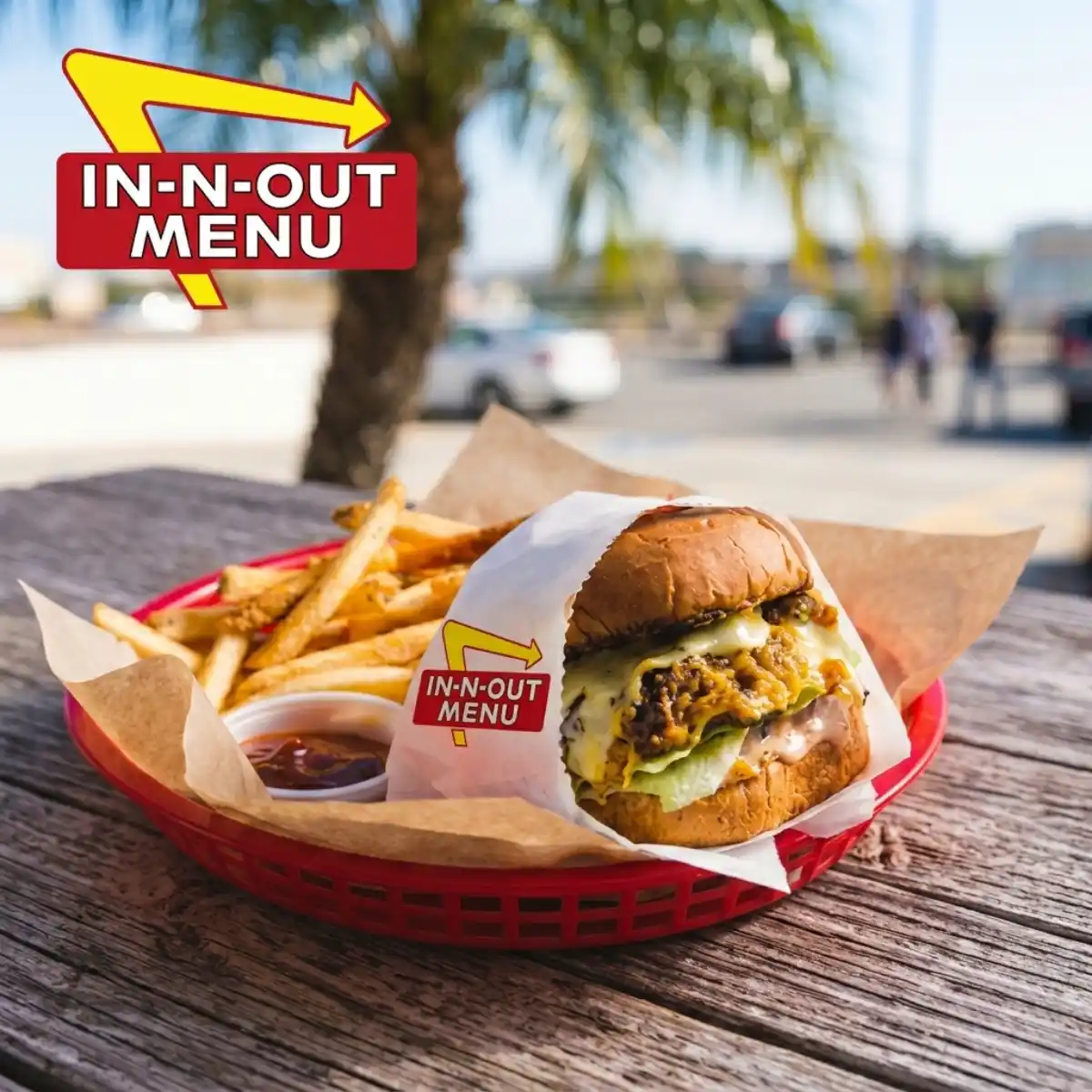
The top bun goes on last, and the entire burger gets wrapped in paper that has been pre printed with the chain’s logo and small Bible verse reference inside. The wrap happens quickly and tightly, which is why the burger holds its shape even on a long car ride home.
The Shake Station
Shakes get hand spun behind the counter using a commercial milkshake machine. The crew member adds real ice cream and milk to a stainless steel mixing cup, locks the cup onto the spindle, and runs the blender for about thirty seconds at high speed. The shake pours thick into the iconic palm tree printed cup, a lid goes on top, and a wide straw gets inserted. The Bible reference Proverbs 3:5 is printed on the bottom of every shake cup.
Quality Control
Before the order leaves the kitchen, a shift lead or experienced crew member usually inspects the build. They check that the right toppings are on each burger, that the fries are filled to the correct portion size, that the wrappers are sealed properly, and that any special orders like Animal Style or Mustard Grilled have been built correctly. This step takes only a few seconds but it is one of the reasons the chain has such a low error rate compared to competitors.
The Total Time
From the moment your order is placed to the moment it reaches your hand, the entire process takes between three and seven minutes depending on how busy the location is. During peak lunch hours at popular locations, the wait can stretch to ten or fifteen minutes because every burger is genuinely made fresh rather than pulled from a holding window. The longer wait is the tradeoff for the freshness, and most regulars consider it well worth the extra time.
Why This Process Matters
Watching the kitchen at In-N-Out is one of the most underrated parts of visiting the chain. The transparency of the open kitchen is intentional. The chain wants you to see that the burgers are being made fresh, that the ingredients are real, that the crew is well trained, and that nothing is being hidden behind closed doors. This visibility builds trust in a way that most fast food chains cannot match because most fast food chains genuinely have things to hide.
The next time you order at In-N-Out, take a minute to watch the line. You will see the patty cook, the produce prep, the bun toaster, the fries cutter, and the assembly station all operating in coordinated rhythm. It looks chaotic at first glance, but the choreography is precise, and the result is a burger that arrives at your hand still warm, still juicy, and still genuinely fresh.
For more on what goes into each burger, check out our In-N-Out Burgers page or browse the full In-N-Out Menu for everything else the kitchen produces every day.